

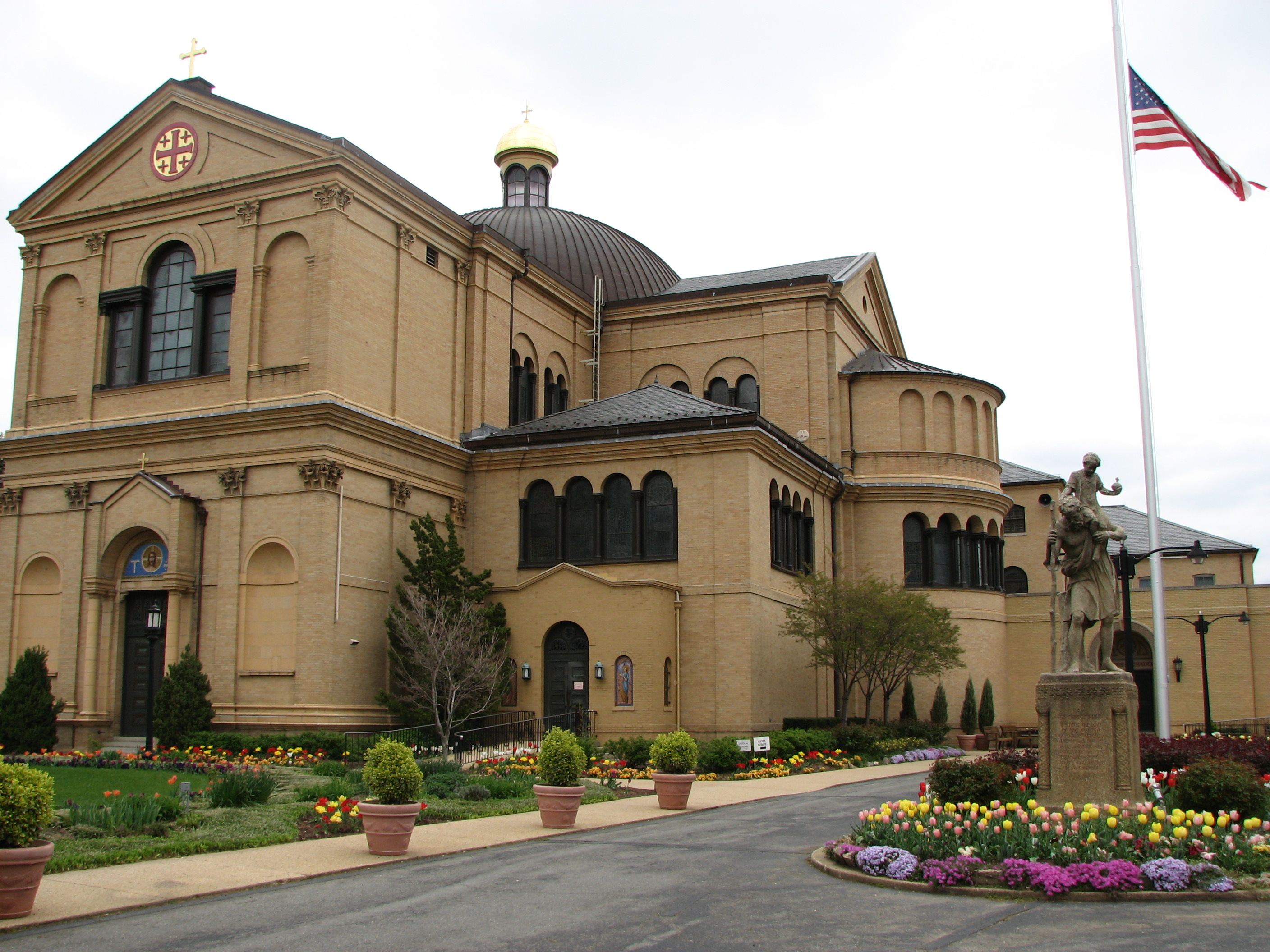
Nestled on a quiet hill in the Brookland neighborhood of Washington, D.C., the Franciscan Monastery of the Holy Land in America is one of the city’s most peaceful and spiritually rich destinations. Often described as a “Little Jerusalem,” the monastery offers visitors a chance to experience replicas of sacred sites from the Holy Land without leaving the United States.
The monastery complex combines sacred architecture, tranquil gardens, and devotional spaces, making it both a pilgrimage site and a cultural landmark. It is home to Franciscan friars who continue an 800-year mission of caring for Christian holy places in the Holy Land.
A Vision to Bring the Holy Land to America
The idea for the monastery originated in the late 19th century through the vision of Father Charles A. Vassani and Father Godfrey Schilling, O.F.M. Their goal was to build a place in the United States that would replicate the most sacred sites of Christianity for pilgrims who could not travel to the Holy Land.
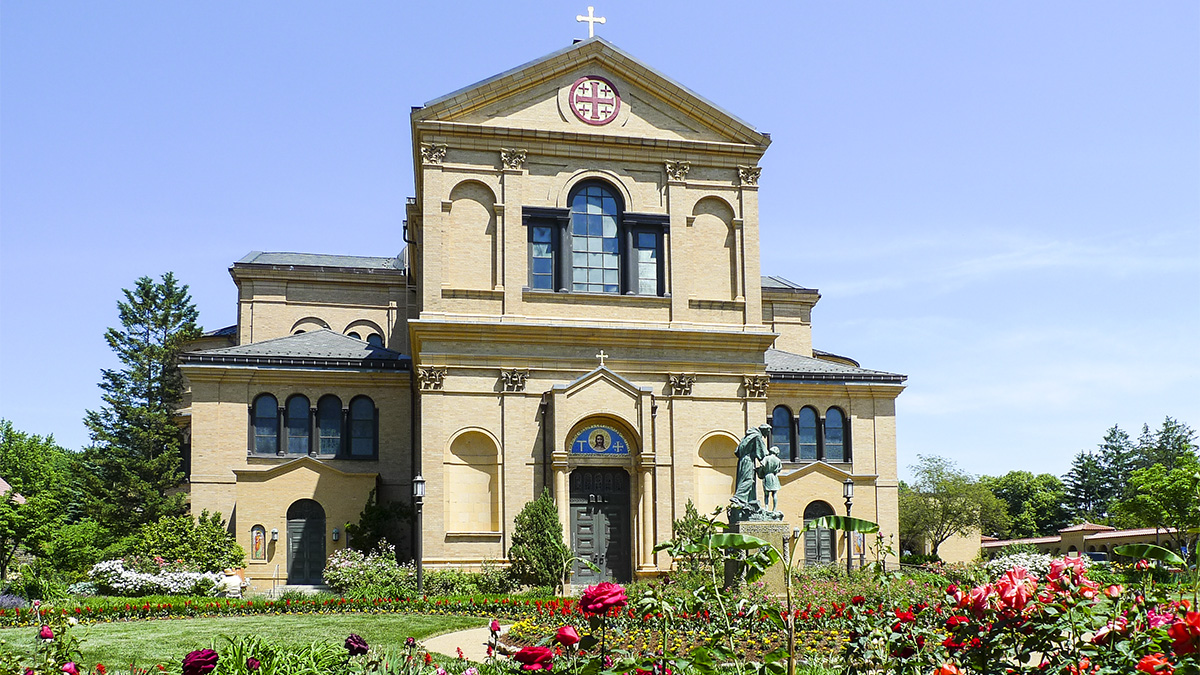
After purchasing land in Washington, D.C. in 1897, the Franciscans began constructing the monastery and its church. Architect Aristide Leonori, from Rome, designed the central Memorial Church of the Holy Sepulcher, which was completed in 1899.
The church reflects a Neo-Byzantine architectural style, inspired by early Christian buildings and the famous Church of the Holy Sepulchre in Jerusalem.
Over the following decades, additional shrines, gardens, and chapels were added, turning the grounds into a devotional landscape representing key moments in the life of Christ.
Replicas of Holy Land Shrines

4
One of the monastery’s most unique features is its collection of replicas of sacred places in the Holy Land. These carefully constructed sites allow visitors to meditate on biblical events in a setting that mirrors the geography and spirituality of Jerusalem and Bethlehem.
Among the most notable are:
- A replica of the Holy Sepulchre, commemorating the burial and resurrection of Christ
- The Grotto of the Nativity, recalling the birthplace of Jesus
- The Garden of Gethsemane shrine
- A Lourdes grotto honoring the Marian apparition in France
- The Rosary Portico, a cloister-like walkway with chapels depicting the mysteries of the Rosary
The Rosary Portico is particularly distinctive, containing plaques with the prayer “Hail Mary” written in nearly 200 languages, symbolizing the global reach of Christian devotion.
The Monastery Gardens: An Oasis of Peace

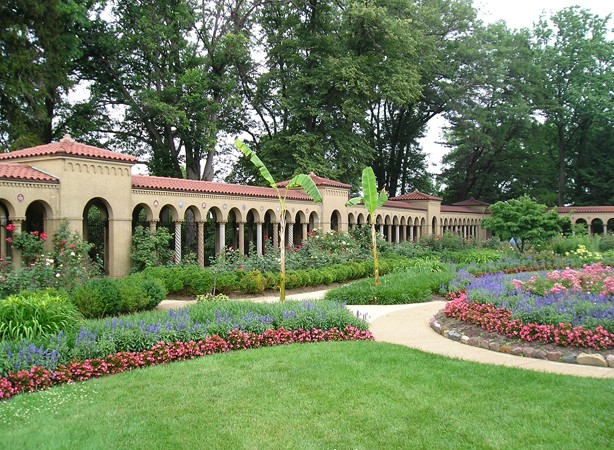
Surrounding the church are century-old gardens covering more than 40 acres, filled with flowers, trees, and contemplative pathways.
The gardens are known for their peaceful atmosphere and have even been recognized as one of the most tranquil places in Washington, D.C.
Visitors strolling through the grounds encounter:
- Over 1,000 rose plants
- Hidden shrines and statues
- Quiet paths designed for prayer and reflection
- Landscaped terraces and cloister gardens
These gardens embody the Franciscan tradition of appreciating nature as a reflection of God’s creation.
The Catacombs Beneath the Church


Beneath the church lies one of the monastery’s most intriguing features: a network of catacombs modeled after those in ancient Rome.
These underground passageways contain symbolic burial niches and chapels, offering visitors a glimpse into early Christian burial traditions and spirituality. Some relics are also preserved here, including the bones of early saints brought from European catacombs.
Guided tours allow visitors to explore the catacombs while learning about early Christian history and the symbolism behind these sacred spaces.
A Living Pilgrimage Site Today
Today, the Franciscan Monastery remains an active religious community and pilgrimage destination. Each year, tens of thousands of visitors come to explore its church, gardens, and shrines.
The monastery continues to support the work of Franciscan friars in the Holy Land through education, spiritual formation, and fundraising for the preservation of Christian holy sites.
Beyond its religious mission, the monastery has become a cherished cultural landmark in Washington, D.C.—a place where history, faith, and beauty come together.
✅ Conclusion
The Franciscan Monastery of the Holy Land in Washington, D.C. offers a rare experience: a spiritual journey through the landscapes of biblical history within the heart of America’s capital. With its historic church, replicas of sacred shrines, peaceful gardens, and mysterious catacombs, the monastery provides a unique environment for reflection, learning, and pilgrimage.
Whether one comes for prayer, history, or simply to enjoy the serene surroundings, the monastery stands as a powerful reminder of the enduring connection between the United States and the sacred heritage of the Holy Land.
Click Here to get a free vacation that could easily include Washington DC
Rick Herring
thmjmj@gmail.com