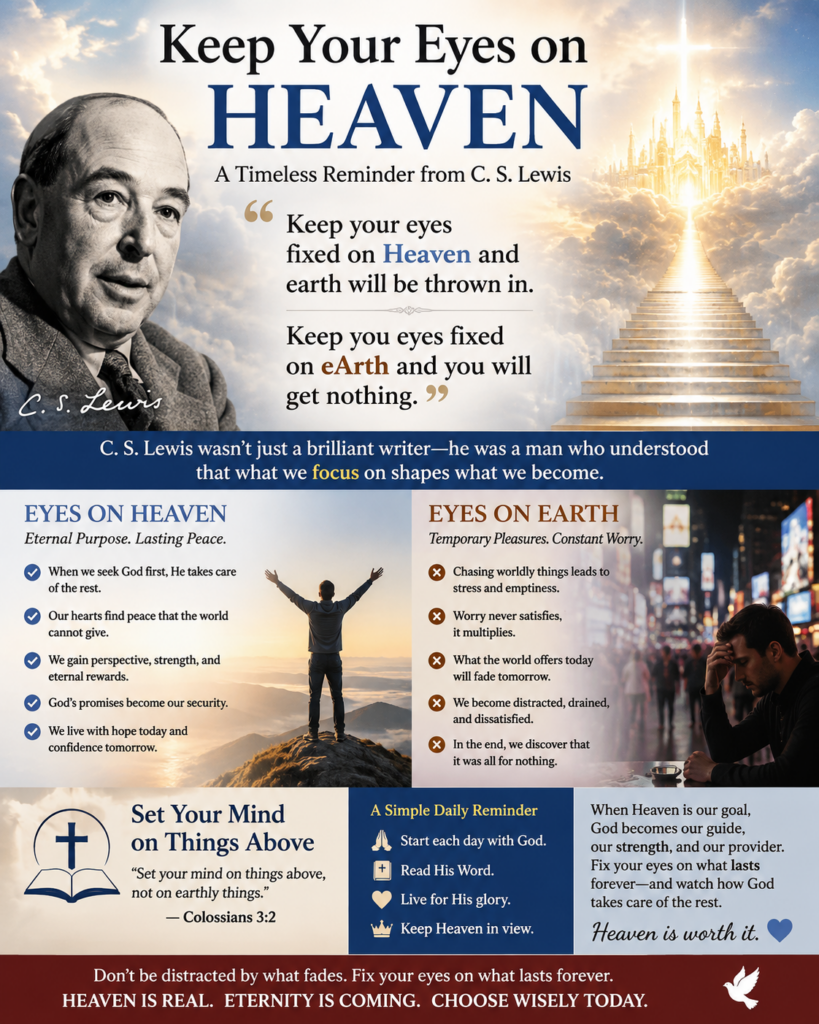
To build Community we must share. We must care for those around us. To be a blessing we must truly be a blessing.
You are my community. We truly have a community of love and sharing, joy and peace. The time has come to add a sustainable income source so we can help those that have no income. Those that are struggling. Those that need a helping hand. a hand up.
This is the community we are building. A community where we share, care, lift up, become one with God our Father. To be fill with and guided by the Holy Spirit.
“The Lord hears the cry of the poor.” Psalm 34: 6 Together we can build a community that has the resources to reach, while building our resources, our email list, our income.
These are just a few of the short Bible verse videos I ha ve posted on YouTube and other social media. Many are getting over 100 views their first day.
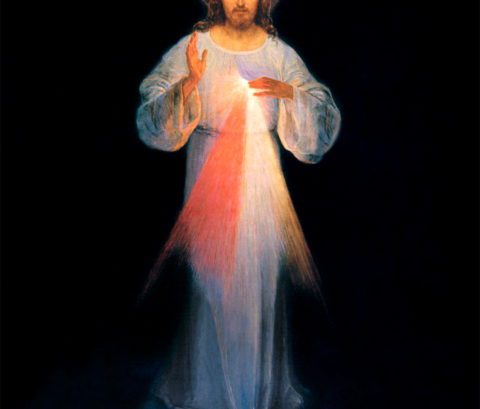
OUR LORD’S PROMISES ATTACHED TO THE PRAYING OF THE CHAPLET OF DIVINE MERCY AS REVEALED TO ST. FAUSTINA KOWALSKA
“I promise that the soul that will venerate this image (of Divine Mercy) will not perish. I also promise victory over (its) enemies already here on earth, especially at the hour of death. I Myself will defend it as My own glory.” (Diary, 48)
“The souls that say this chaplet will be embraced by My mercy during their lifetime and especially at the hour of their death.” (Diary, 754)
“When hardened sinners say it, I will fill their souls with peace, and the hour of their death will be a happy one.” (Diary, 1541)
“When they say this chaplet in the presence of the dying, I will stand between My Father and the dying person, not as a just Judge but as a merciful Savior.” (Diary, 1541)
“Whoever will recite it will receive great mercy at the hour of death.” (Diary, 687)
“Priests will recommend it to sinners as their last hope of salvation. Even if there were a sinner most hardened, if he were to recite this chaplet only once, he would receive grace from My infinite mercy…I desire to grant unimaginable graces to those souls who trust in My mercy.” (Diary, 687)
“To priests who proclaim and extol My mercy, I will give wondrous power; I will anoint their words and touch the hearts of those to whom they will speak.” (Diary, 1521)
“The prayer most pleasing to Me is prayer for the conversion for sinners. Know, my daughter, that this prayer is always heard and answered.” (Diary, 1397)
“At three o’clock, implore My mercy, especially for sinners; and, if only for a brief moment, immerse yourself in My Passion, particularly in My abandonment at the moment of agony…I will refuse nothing to the soul that makes a request of Me in virtue of My Passion.” (Diary, 1320; also, cf. Diary, 1572)
“Souls who spread the honor of My mercy…at the hour of death I will not be a Judge for them, but the Merciful Savior.” (Diary, 1075)
“The two rays denote Blood and Water…These two rays issued from the very depths of My tender mercy when My agonized Heart was opened by a lance on the Cross. These rays shield souls from the wrath of My Father…I desire that the first Sunday after Easter be the Feast of Mercy…whoever approaches the Fount of Life on this day will be granted complete remission of sins and punishment. Mankind will not have peace until it turns with trust to My mercy.” (Diary, 299-300)
“I desire that the Feast of Mercy…be solemnly celebrated on the first Sunday after Easter…The soul that will go to Confession and receive Holy Communion (in a state of grace on this day) shall obtain complete forgiveness of sins and punishment.” (Diary, 699)
“Through this chaplet you will obtain everything, if what you ask for is compatible with My will.” (Diary, 1731)
“My mercy is greater than your sins and those of the entire world.” (Diary, 1485)
Fr. Wade L. J. Menezes, CPM is a member of the Fathers of Mercy, a missionary preaching Religious Congregation based in Auburn, Kentucky. Ordained a priest during the Great Jubilee Year 2000, he received his Bachelor of Arts Degree in Catholic Thought from the Oratory of St. Philip Neri in Toronto, Canada and his dual Master of Arts and Master of Divinity Degrees in Theology from Holy Apostles Seminary in Cromwell, Connecticut. His secular college degrees are in journalism and communications. View all posts by Fr. Wade Menezes →
Last night, I was speaking with my sister about a priest who had planned to retire at the age of seventy-five. He had given years of faithful service and, by all expectations, was ready to step away from ministry. Yet, because he served at the discretion of his bishop, his plans changed. Instead of retiring, he was assigned to pastor a startup church—beginning again when he thought he was finished.
That conversation stayed with me.
This morning, I woke up with a deeper realization: we all serve at the discretion of God. Not at our own timing, not according to our own carefully arranged plans, but according to His will. And if we are honest, that truth is both humbling and unsettling.
Scripture reminds us of this reality in powerful ways. When Judas left the Last Supper, it is written that the devil had already entered him as he went out to betray the Lord. Even in that moment—dark, painful, and seemingly out of control—God’s greater purpose was unfolding. Nothing was outside His authority.
This truth became even more personal this week.
My sister had planned to retire after thirty-six years of banking. It was meant to be a joyful milestone. After decades of working alongside the same people, there were surely plans for celebration, reflection, and closure. But life had other plans.
Her husband suffered a heart attack.
Instead of enjoying her final days at work, she spent her next-to-last day driving to Oklahoma City and sitting in a hospital room through the night. He received a stent, and by April 2nd, they returned home to Atoka, Oklahoma. What was supposed to be a week of celebration became a week of crisis, care, and uncertainty.
And yet, in that disruption, there was a greater truth revealed: no matter how much we plan, God is in charge.
We map out our lives with timelines and expectations. We anticipate milestones and transitions. But in a moment, everything can shift. Not because God has lost control—but because He never relinquished it in the first place.
Even Jesus Christ Himself lived in complete submission to the Father’s will. He did not act independently of God’s purpose. He walked a path that led through suffering—His Passion, His crucifixion, and ultimately His resurrection. From a human perspective, it may have looked like tragedy or defeat. But in God’s plan, it was redemption.
If Jesus, the Son, lived and served according to the Father’s will, how much more must we?
We may not always understand why our plans are interrupted. We may not see the purpose behind sudden changes or painful circumstances. But we can trust that nothing is wasted in God’s hands.
The priest who thought he was retiring found himself beginning anew. My sister who expected celebration found herself in a hospital. And in both stories, there is a common thread: God’s authority overrides our expectations.
We do not serve at our own discretion.
We serve at His.
And in that truth, there is both surrender—and peace.
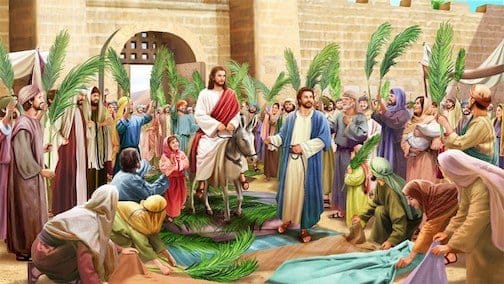
Palm Sunday, formally known as Palm Sunday of the Lord’s Passion, marks the beginning of Holy Week, the most sacred time in the Catholic liturgical year. It is a day filled with both celebration and solemnity—a powerful contrast that captures the heart of the Christian mystery: Christ as both triumphant King and suffering Savior.
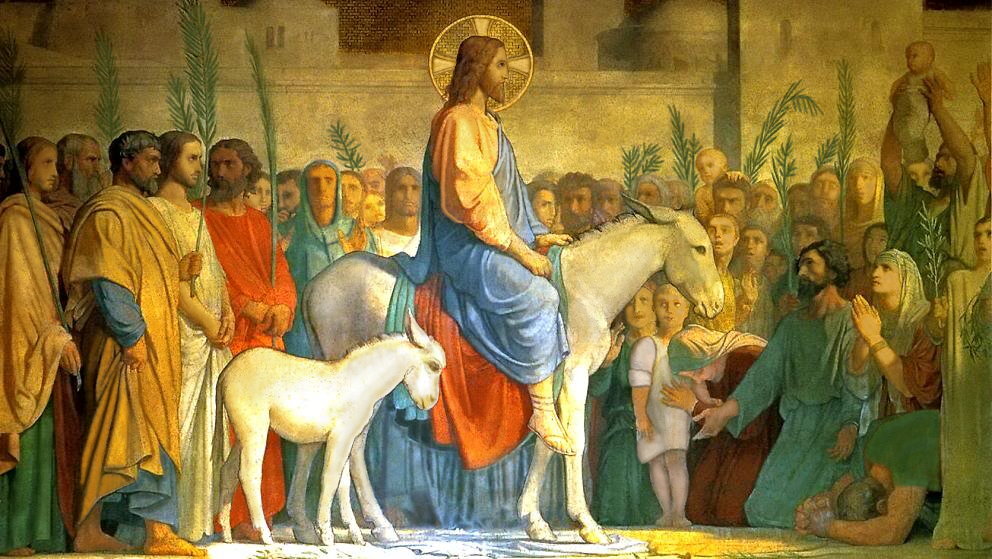
This sacred day commemorates Jesus’ entry into Jerusalem, where crowds welcomed Him with palm branches and cries of “Hosanna!” Yet, within the same liturgy, the Church invites us to hear the Passion narrative, where those cries shift dramatically to “Crucify Him!” This tension invites deep reflection on faith, human weakness, and divine love.
🌿 The Symbolism of Palms
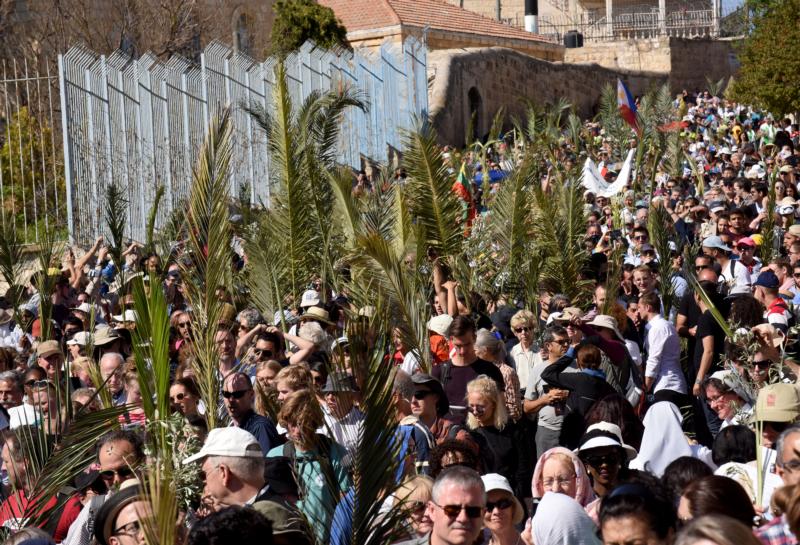
Palm branches are central to the celebration of this day. In ancient times, palms symbolized victory and triumph, and in the Church, they represent Christ’s victory over sin and death.
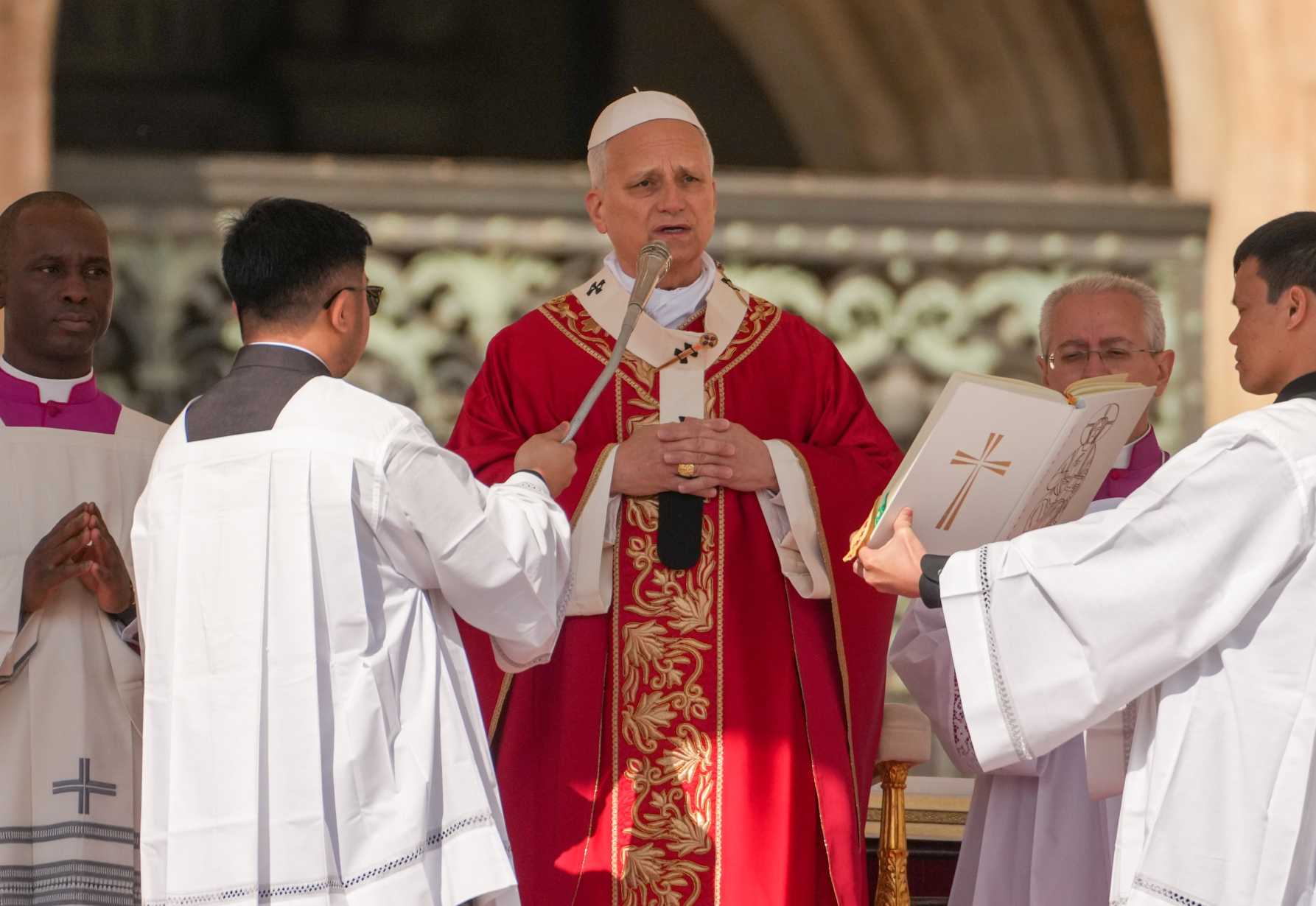
During Mass, palms are blessed and distributed to the faithful, who often take them home as sacramentals—visible reminders of spiritual realities. Many Catholics place them in their homes, behind crucifixes, or in prayer spaces as a sign of protection and devotion.
In a beautiful liturgical cycle, these same palms are later burned to create ashes for the following year’s Ash Wednesday, linking Christ’s triumph with our call to repentance.
✝️ The Liturgy: Joy and Sorrow Together
Palm Sunday Mass is unique because it contains two distinct and contrasting moments:
1. The Procession of Palms
The celebration often begins outside the church with a procession, recalling Jesus’ entry into Jerusalem. The faithful carry palm branches, singing hymns of praise just as the crowds did centuries ago.
2. The Proclamation of the Passion
Later in the Mass, the tone shifts dramatically as the Passion narrative is read—often with multiple voices representing different characters. This reading recounts the suffering and death of Christ.
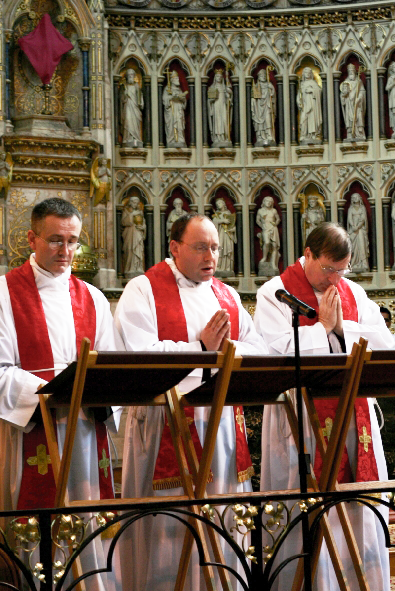
The priest wears red vestments, symbolizing the blood of Christ’s sacrifice. The liturgy intentionally holds both joy and sorrow together, reminding us that glory and suffering are inseparably linked in the Christian life.
📖 A Story That Defines All Stories
Palm Sunday is not just a historical remembrance—it is an invitation.
The Church presents this day as a “defined story”—one that shapes how believers understand love, sacrifice, betrayal, and redemption. As we hear the Passion, we are not passive listeners; we are participants, called to reflect:
Where do we stand in the crowd?
Are we praising Christ one moment and turning away the next?
How do we respond to suffering, both our own and others’?
This day challenges us to confront the reality of sin while embracing the hope of salvation.
🕊️ Humility and Kingship
One of the most striking elements of Palm Sunday is how Jesus enters Jerusalem—not on a war horse, but on a donkey.
This detail is deeply symbolic:
A war horse represents power, conquest, and earthly authority.
A donkey represents humility, peace, and service.
Christ reveals a different kind of kingship—one rooted not in domination, but in self-giving love. He is both King and Suffering Servant, a paradox that lies at the core of Christian belief.
🌿 Entering Holy Week
Palm Sunday opens the door to Holy Week, leading toward the profound events of:
Holy Thursday – The Last Supper
Good Friday – The Passion and Crucifixion
Holy Saturday & Easter Vigil – The Resurrection
It is a day that asks us not just to remember, but to walk with Christ—through praise, through suffering, and ultimately, toward new life.
✨ Final Reflection
Palm Sunday is a mirror of the human heart and a revelation of divine love. It reminds us that faith is not just about moments of joy, but also about fidelity in times of trial.
As we hold our palm branches, we are invited to follow Christ—not only in celebration, but all the way to the Cross… and beyond it, to the hope of Resurrection.
“Hosanna in the highest!” — and may those words echo in our lives, not just today, but every day.
If you liked this article, pleAse share your feedback, share with others and come back for more stories.