Turning Nothing into Something: A Life-Changing Lesson in Entrepreneurship
In a world where many believe that success requires capital, connections, or privilege, stories occasionally emerge that challenge this assumption. One such powerful narrative is told in the video How to Make Money Without Money. A Life Changing Story, which highlights how creativity, courage, and persistence can transform even the humblest beginnings into meaningful success.
The Power of Starting with Nothing
At the heart of the story is a young boy—just 16 years old—who had no money, no resources, and no business background. What he did have, however, was something far more valuable: a simple recipe and the willingness to act.
This immediately reframes a common misconception. Many people delay pursuing opportunities because they feel unprepared or under-resourced. But the story demonstrates that resourcefulness matters more than resources. The boy didn’t wait for perfect conditions—he started with what he had.
Seeing Opportunity Where Others Don’t
One of the most important lessons from the story is the ability to recognize value in ordinary things. A simple recipe might seem insignificant, but the boy saw its potential. Instead of dismissing it, he asked a precipe,courage, comfort,owerful question:
“How can I turn this into something valuable?”
This mindset is what separates entrepreneurs from spectators. Opportunities are rarely obvious—they are often hidden in plain sight, waiting for someone to act.
Courage Over Comfort
Starting without money requires boldness. The boy had to step outside his comfort zone, take risks, and face uncertainty. Whether it was approaching people, offering his product, or dealing with rejection, every step required courage.
This highlights a key truth: Fear is inevitable, but growth comes from moving forward anyway.
Too often, people wait until they feel confident. But confidence is usually built after taking action, not before.
Persistence: The Real Game-Changer
No success story is complete without struggle. The boy’s journey was not instant or easy. There were setbacks, doubts, and challenges along the way.
What made the difference was persistence.
Instead of giving up when things got tough, he kept going. This resilience is often the defining factor between those who succeed and those who don’t. Talent and ideas matter—but consistency and determination matter more.
Lessons for Everyday Life
While the story is about making money, its lessons extend far beyond business:
Start where you are – You don’t need perfect conditions.
Use what you have – Even small assets can become big opportunities.
Take action – Ideas are useless without execution.
Stay consistent – Success is built over time, not overnight.
Conclusion
This life-changing story reminds us that success is not reserved for the privileged—it is accessible to anyone willing to think differently and act boldly. The journey from nothing to something is not easy, but it is possible.
Ultimately, the message is simple yet profound: You don’t need money to start—you need mindset, courage, and persistence.
If you like this article, please leave your feedback and come back for more stories.
Rick Herring thmjmj@gmail.com
Click Here to view more stories. Click Blog in the upper left hand corner.
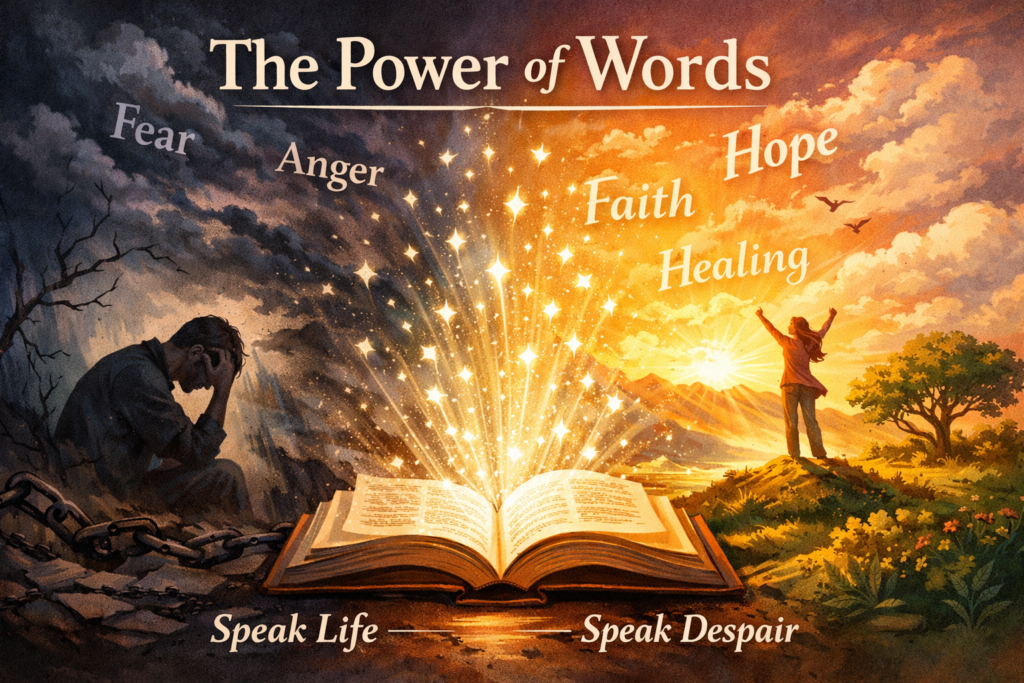
Words are far more than sounds we release into the air or symbols we place on a page. They are vessels of meaning, carriers of belief, and architects of the future we step into each day. Scripture reminds us of this sobering truth: “By your words you will be saved or condemned.”
In other words, what we speak does not merely describe our lives — it helps determine the direction they take. Every word we choose reveals what is taking root in our hearts. When our language is filled with bitterness, fear, defeat, or complaint, it reflects an inner posture that expects little and trusts less.
Over time, those words shape our mindset, influence our decisions, and color how we see the world. They can trap us in cycles of regret, resentment, and hopelessness — condemning us not by divine punishment alone, but by the life we build with our own mouths.
On the other hand, words spoken in faith, truth, and love proclaim a different future. When we speak of hope in the midst of difficulty, gratitude in seasons of lack, and trust in times of uncertainty, we align our hearts with God’s promises rather than our fears. These words do not deny reality; they declare that reality is not the final authority. They lift our eyes beyond present circumstances and train our hearts to expect redemption, growth, and purpose.
Words also possess the power to shape others. A careless remark can wound for years, while a timely word of encouragement can restore a weary soul. Parents speak futures over their children. Leaders shape cultures with their language. Friends either strengthen or weaken one another by what they say in moments that matter most. Life and death, Scripture tells us, are in the power of the tongue — and those who love it will eat its fruit.
Changing your future often begins with changing your words. This does not mean repeating empty phrases or pretending struggles do not exist. It means choosing language that agrees with truth, not despair; with faith, not fear. It means pausing before speaking and asking, “Is this building life or reinforcing defeat?” Over time, intentional words reshape thoughts, thoughts influence actions, and actions carve new paths forward.
To change your words is to take responsibility for the atmosphere you create — within your own heart and in the lives of those around you. Speak forgiveness instead of grudges. Speak possibility instead of limitation. Speak purpose instead of confusion. When your words are aligned with truth and grace, they become instruments of salvation rather than condemnation.
Your future is being written every day, one sentence at a time. Choose your words wisely. Speak life, and you will begin to live it. Words are far more than sounds we release into the air or symbols we place on a page. They are vessels of meaning, carriers of belief, and architects of the future we step into each day. Scripture reminds us of this sobering truth: “By your words you will be saved or condemned.”
In other words, what we speak does not merely describe our lives — it helps determine the direction they take. Every word we choose reveals what is taking root in our hearts. When our language is filled with bitterness, fear, defeat, or complaint, it reflects an inner posture that expects little and trusts less. Over time, those words shape our mindset, influence our decisions, and color how we see the world. They can trap us in cycles of regret, resentment, and hopelessness — condemning us not by divine punishment alone, but by the life we build with our own mouths.
On the other hand, words spoken in faith, truth, and love proclaim a different future. When we speak of hope in the midst of difficulty, gratitude in seasons of lack, and trust in times of uncertainty, we align our hearts with God’s promises rather than our fears.
These words do not deny reality; they declare that reality is not the final authority. They lift our eyes beyond present circumstances and train our hearts to expect redemption, growth, and purpose. Words also possess the power to shape others. A careless remark can wound for years, while a timely word of encouragement can restore a weary soul. Parents speak futures over their children. Leaders shape cultures with their language.
Friends either strengthen or weaken one another by what they say in moments that matter most. Life and death, Scripture tells us, are in the power of the tongue — and those who love it will eat its fruit. Changing your future often begins with changing your words. This does not mean repeating empty phrases or pretending struggles do not exist. It means choosing language that agrees with truth, not despair; with faith, not fear.
It means pausing before speaking and asking, “Is this building life or reinforcing defeat?” Over time, intentional words reshape thoughts, thoughts influence actions, and actions carve new paths forward. To change your words is to take responsibility for the atmosphere you create — within your own heart and in the lives of those around you. Speak forgiveness instead of grudges. Speak possibility instead of limitation. Speak purpose instead of confusion.
When your words are aligned with truth and grace, they become instruments of salvation rather than condemnation. Your future is being written every day, one sentence at a time. Choose your words wisely. Speak life, and you will begin to live it. Words are far more than sounds we release into the air or symbols we place on a page.
They are vessels of meaning, carriers of belief, and architects of the future we step into each day. Scripture reminds us of this sobering truth: “By your words you will be saved or condemned.” In other words, what we speak does not merely describe our lives — it helps determine the direction they take.
Every word we choose reveals what is taking root in our hearts. When our language is filled with bitterness, fear, defeat, or complaint, it reflects an inner posture that expects little and trusts less. Over time, those words shape our mindset, influence our decisions, and color how we see the world.
They can trap us in cycles of regret, resentment, and hopelessness — condemning us not by divine punishment alone, but by the life we build with our own mouths. On the other hand, words spoken in faith, truth, and love proclaim a different future. When we speak of hope in the midst of difficulty, gratitude in seasons of lack, and trust in times of uncertainty, we align our hearts with God’s promises rather than our fears. These words do not deny reality; they declare that reality is not the final authority. They lift our eyes beyond present circumstances and train our hearts to expect redemption, growth, and purpose.
Words also possess the power to shape others. A careless remark can wound for years, while a timely word of encouragement can restore a weary soul. Parents speak futures over their children. Leaders shape cultures with their language. Friends either strengthen or weaken one another by what they say in moments that matter most. Life and death,
Scripture tells us, are in the power of the tongue — and those who love it will eat its fruit. Changing your future often begins with changing your words. This does not mean repeating empty phrases or pretending struggles do not exist. It means choosing language that agrees with truth, not despair; with faith, not fear. It means pausing before speaking and asking, “Is this building life or reinforcing defeat?”
Over time, intentional words reshape thoughts, thoughts influence actions, and actions carve new paths forward. To change your words is to take responsibility for the atmosphere you create — within your own heart and in the lives of those around you. Speak forgiveness instead of grudges. Speak possibility instead of limitation. Speak purpose instead of confusion.
When your words are aligned with truth and grace, they become instruments of salvation rather than condemnation. Your future is being written every day, one sentence at a time. Choose your words wisely. Speak life, and you will begin to live it. Image created • The power of words in contrast.