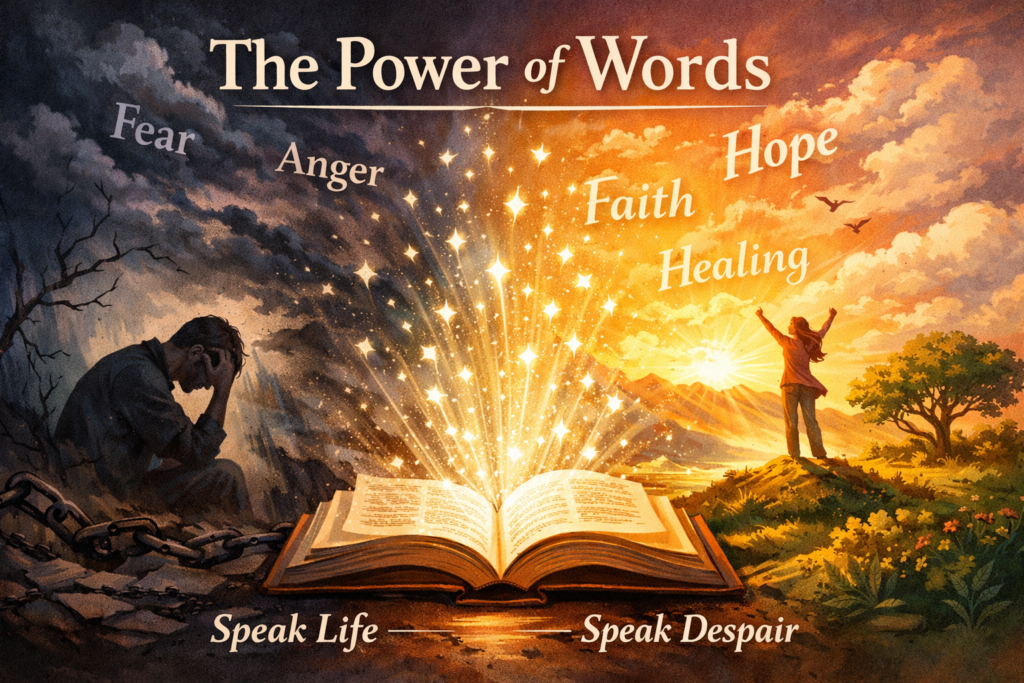
Words are far more than sounds we release into the air or symbols we place on a page. They are vessels of meaning, carriers of belief, and architects of the future we step into each day. Scripture reminds us of this sobering truth: “By your words you will be saved or condemned.”
In other words, what we speak does not merely describe our lives — it helps determine the direction they take. Every word we choose reveals what is taking root in our hearts. When our language is filled with bitterness, fear, defeat, or complaint, it reflects an inner posture that expects little and trusts less.
Over time, those words shape our mindset, influence our decisions, and color how we see the world. They can trap us in cycles of regret, resentment, and hopelessness — condemning us not by divine punishment alone, but by the life we build with our own mouths.
On the other hand, words spoken in faith, truth, and love proclaim a different future. When we speak of hope in the midst of difficulty, gratitude in seasons of lack, and trust in times of uncertainty, we align our hearts with God’s promises rather than our fears. These words do not deny reality; they declare that reality is not the final authority. They lift our eyes beyond present circumstances and train our hearts to expect redemption, growth, and purpose.
Words also possess the power to shape others. A careless remark can wound for years, while a timely word of encouragement can restore a weary soul. Parents speak futures over their children. Leaders shape cultures with their language. Friends either strengthen or weaken one another by what they say in moments that matter most. Life and death, Scripture tells us, are in the power of the tongue — and those who love it will eat its fruit.
Changing your future often begins with changing your words. This does not mean repeating empty phrases or pretending struggles do not exist. It means choosing language that agrees with truth, not despair; with faith, not fear. It means pausing before speaking and asking, “Is this building life or reinforcing defeat?” Over time, intentional words reshape thoughts, thoughts influence actions, and actions carve new paths forward.
To change your words is to take responsibility for the atmosphere you create — within your own heart and in the lives of those around you. Speak forgiveness instead of grudges. Speak possibility instead of limitation. Speak purpose instead of confusion. When your words are aligned with truth and grace, they become instruments of salvation rather than condemnation.
Your future is being written every day, one sentence at a time. Choose your words wisely. Speak life, and you will begin to live it. Words are far more than sounds we release into the air or symbols we place on a page. They are vessels of meaning, carriers of belief, and architects of the future we step into each day. Scripture reminds us of this sobering truth: “By your words you will be saved or condemned.”
In other words, what we speak does not merely describe our lives — it helps determine the direction they take. Every word we choose reveals what is taking root in our hearts. When our language is filled with bitterness, fear, defeat, or complaint, it reflects an inner posture that expects little and trusts less. Over time, those words shape our mindset, influence our decisions, and color how we see the world. They can trap us in cycles of regret, resentment, and hopelessness — condemning us not by divine punishment alone, but by the life we build with our own mouths.
On the other hand, words spoken in faith, truth, and love proclaim a different future. When we speak of hope in the midst of difficulty, gratitude in seasons of lack, and trust in times of uncertainty, we align our hearts with God’s promises rather than our fears.
These words do not deny reality; they declare that reality is not the final authority. They lift our eyes beyond present circumstances and train our hearts to expect redemption, growth, and purpose. Words also possess the power to shape others. A careless remark can wound for years, while a timely word of encouragement can restore a weary soul. Parents speak futures over their children. Leaders shape cultures with their language.
Friends either strengthen or weaken one another by what they say in moments that matter most. Life and death, Scripture tells us, are in the power of the tongue — and those who love it will eat its fruit. Changing your future often begins with changing your words. This does not mean repeating empty phrases or pretending struggles do not exist. It means choosing language that agrees with truth, not despair; with faith, not fear.
It means pausing before speaking and asking, “Is this building life or reinforcing defeat?” Over time, intentional words reshape thoughts, thoughts influence actions, and actions carve new paths forward. To change your words is to take responsibility for the atmosphere you create — within your own heart and in the lives of those around you. Speak forgiveness instead of grudges. Speak possibility instead of limitation. Speak purpose instead of confusion.
When your words are aligned with truth and grace, they become instruments of salvation rather than condemnation. Your future is being written every day, one sentence at a time. Choose your words wisely. Speak life, and you will begin to live it. Words are far more than sounds we release into the air or symbols we place on a page.
They are vessels of meaning, carriers of belief, and architects of the future we step into each day. Scripture reminds us of this sobering truth: “By your words you will be saved or condemned.” In other words, what we speak does not merely describe our lives — it helps determine the direction they take.
Every word we choose reveals what is taking root in our hearts. When our language is filled with bitterness, fear, defeat, or complaint, it reflects an inner posture that expects little and trusts less. Over time, those words shape our mindset, influence our decisions, and color how we see the world.
They can trap us in cycles of regret, resentment, and hopelessness — condemning us not by divine punishment alone, but by the life we build with our own mouths. On the other hand, words spoken in faith, truth, and love proclaim a different future. When we speak of hope in the midst of difficulty, gratitude in seasons of lack, and trust in times of uncertainty, we align our hearts with God’s promises rather than our fears. These words do not deny reality; they declare that reality is not the final authority. They lift our eyes beyond present circumstances and train our hearts to expect redemption, growth, and purpose.
Words also possess the power to shape others. A careless remark can wound for years, while a timely word of encouragement can restore a weary soul. Parents speak futures over their children. Leaders shape cultures with their language. Friends either strengthen or weaken one another by what they say in moments that matter most. Life and death,
Scripture tells us, are in the power of the tongue — and those who love it will eat its fruit. Changing your future often begins with changing your words. This does not mean repeating empty phrases or pretending struggles do not exist. It means choosing language that agrees with truth, not despair; with faith, not fear. It means pausing before speaking and asking, “Is this building life or reinforcing defeat?”
Over time, intentional words reshape thoughts, thoughts influence actions, and actions carve new paths forward. To change your words is to take responsibility for the atmosphere you create — within your own heart and in the lives of those around you. Speak forgiveness instead of grudges. Speak possibility instead of limitation. Speak purpose instead of confusion.
When your words are aligned with truth and grace, they become instruments of salvation rather than condemnation. Your future is being written every day, one sentence at a time. Choose your words wisely. Speak life, and you will begin to live it. Image created • The power of words in contrast.
Rick Herring
thmjmj@gmail.com
Leave a Reply