
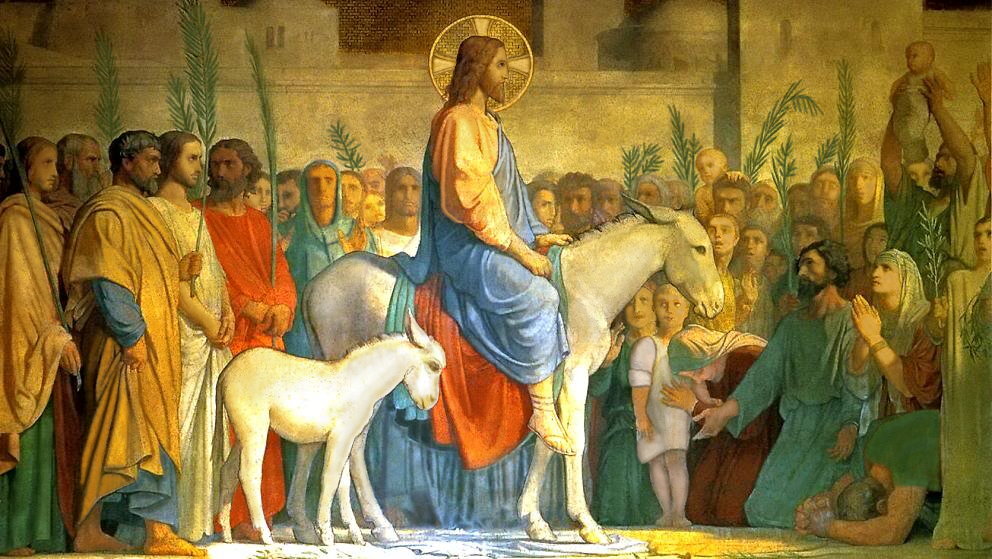
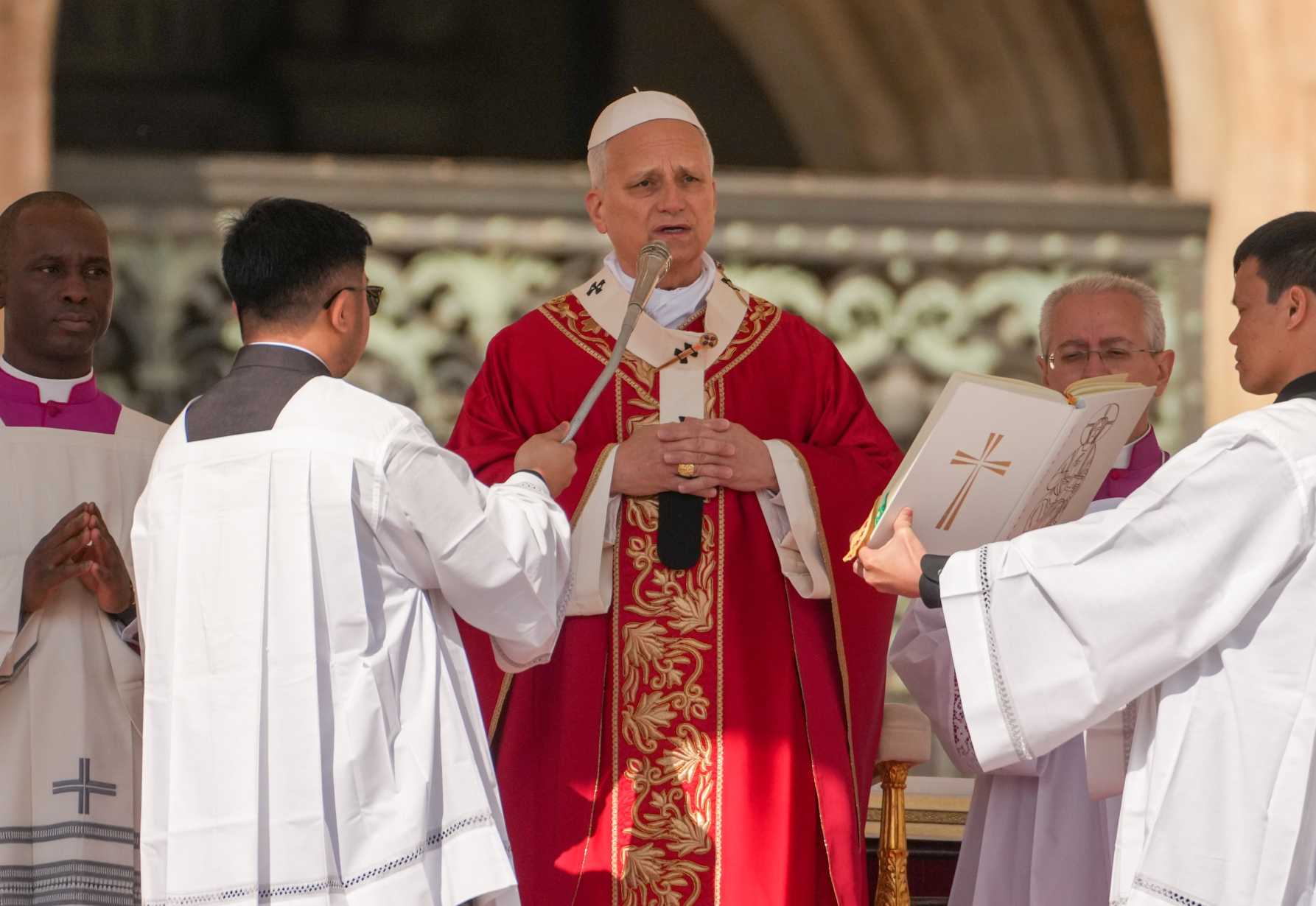
Palm Sunday, formally known as Palm Sunday of the Lord’s Passion, marks the beginning of Holy Week, the most sacred time in the Catholic liturgical year. It is a day filled with both celebration and solemnity—a powerful contrast that captures the heart of the Christian mystery: Christ as both triumphant King and suffering Savior.
This sacred day commemorates Jesus’ entry into Jerusalem, where crowds welcomed Him with palm branches and cries of “Hosanna!” Yet, within the same liturgy, the Church invites us to hear the Passion narrative, where those cries shift dramatically to “Crucify Him!” This tension invites deep reflection on faith, human weakness, and divine love.
🌿 The Symbolism of Palms

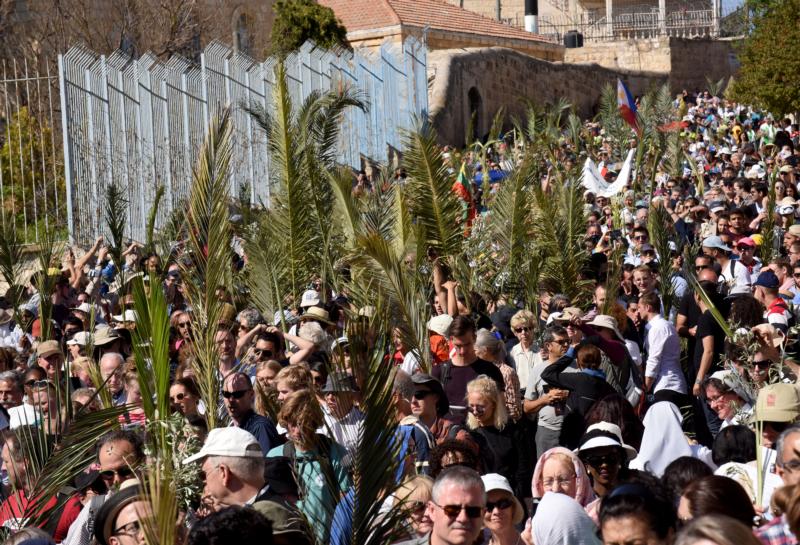

Palm branches are central to the celebration of this day. In ancient times, palms symbolized victory and triumph, and in the Church, they represent Christ’s victory over sin and death.
During Mass, palms are blessed and distributed to the faithful, who often take them home as sacramentals—visible reminders of spiritual realities. Many Catholics place them in their homes, behind crucifixes, or in prayer spaces as a sign of protection and devotion.
In a beautiful liturgical cycle, these same palms are later burned to create ashes for the following year’s Ash Wednesday, linking Christ’s triumph with our call to repentance.
✝️ The Liturgy: Joy and Sorrow Together
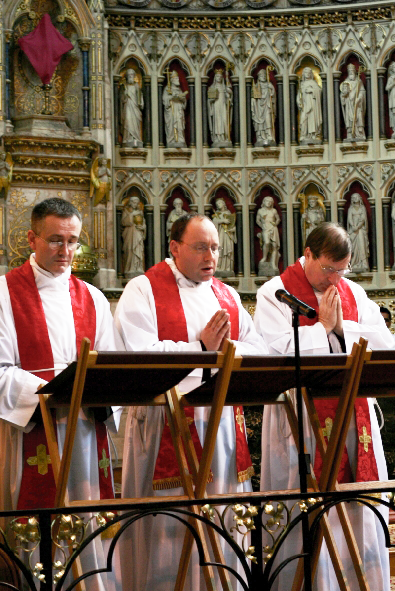
Palm Sunday Mass is unique because it contains two distinct and contrasting moments:
1. The Procession of Palms
The celebration often begins outside the church with a procession, recalling Jesus’ entry into Jerusalem. The faithful carry palm branches, singing hymns of praise just as the crowds did centuries ago.
2. The Proclamation of the Passion
Later in the Mass, the tone shifts dramatically as the Passion narrative is read—often with multiple voices representing different characters. This reading recounts the suffering and death of Christ.
The priest wears red vestments, symbolizing the blood of Christ’s sacrifice. The liturgy intentionally holds both joy and sorrow together, reminding us that glory and suffering are inseparably linked in the Christian life.
📖 A Story That Defines All Stories
Palm Sunday is not just a historical remembrance—it is an invitation.
The Church presents this day as a “defined story”—one that shapes how believers understand love, sacrifice, betrayal, and redemption. As we hear the Passion, we are not passive listeners; we are participants, called to reflect:
- Where do we stand in the crowd?
- Are we praising Christ one moment and turning away the next?
- How do we respond to suffering, both our own and others’?
This day challenges us to confront the reality of sin while embracing the hope of salvation.
🕊️ Humility and Kingship


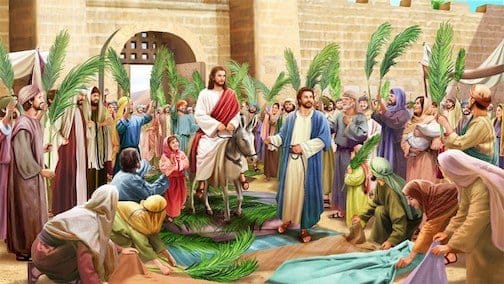
One of the most striking elements of Palm Sunday is how Jesus enters Jerusalem—not on a war horse, but on a donkey.
This detail is deeply symbolic:
- A war horse represents power, conquest, and earthly authority.
- A donkey represents humility, peace, and service.
Christ reveals a different kind of kingship—one rooted not in domination, but in self-giving love. He is both King and Suffering Servant, a paradox that lies at the core of Christian belief.
🌿 Entering Holy Week
Palm Sunday opens the door to Holy Week, leading toward the profound events of:
- Holy Thursday – The Last Supper
- Good Friday – The Passion and Crucifixion
- Holy Saturday & Easter Vigil – The Resurrection
It is a day that asks us not just to remember, but to walk with Christ—through praise, through suffering, and ultimately, toward new life.
✨ Final Reflection
Palm Sunday is a mirror of the human heart and a revelation of divine love. It reminds us that faith is not just about moments of joy, but also about fidelity in times of trial.
As we hold our palm branches, we are invited to follow Christ—not only in celebration, but all the way to the Cross… and beyond it, to the hope of Resurrection.
“Hosanna in the highest!” — and may those words echo in our lives, not just today, but every day.
If you liked this article, pleAse share your feedback, share with others and come back for more stories.
Rick Herring
thmjmj@gmail.com
Leave a Reply